


So, Black History Month 2010 is upon us, and as I sit here and take a breather after working hard to get the website to this state of readiness, I wonder how long it will be before the mud starts flying.
Black History Month is at best controversial in Britain for a number of reasons. There are those on the right of the political spectrum who believe it is “Racist and Divisive”. They say that to have Black History Month smacks of hypocrisy when white organisations are not afforded the same courtesy.
those who take this position believe that to celebrate black history exclusively is to separate black people from the rest of the population and that ultimately leads to deeper division.
Then we have those on the left of politics who believe that Black History Month is essential. Stating that Black people have been oppressed for far too long and that the creation of a dedicated month, of events and seminars, creation of websites, informative newsletters and media programming, empowers Black people to re-connect with their lost and hidden heritage. They believe that the removal or cessation of such an event would be racist in the extreme and an attack on the civil liberties of black people.
So where is the middle ground?
Before we get into the rights and wrongs of whether BHM should even exist, allow me to make some observations.
I approach the whole subject with the observation that Black History Month EXISTS, it existed in America first, and it exists now in Britain and has since the mid-Eighties, although few people would know it. The very fact that it exists, suggests to me that any person of African/Caribbean origin, who has anything about them, will want to be involved in some way.
If there are seminars, information or exhibitions available to you, that will help you increase your knowledge of self and national identity, then why not go along? Why not increase your knowledge of history? Why not contextualise your own life in the history of not just your own ethnic group but in the world community? Anyone who rejects this idea, simply because they feel uninterested, is in my opinion, cutting their nose to spite their face.
For those who exhibit at and organise events during Black History Month, not only is it a perfect time, to reach out to your own demographic and beyond with information about your services and products, but it is also a fantastic networking opportunity. Businesses that ignore BHM are simply sleeping and missing out on the opportunity to expand their customer base.
Regardless of your ethnicity, this is a time of economic hardship, and events that bring people together en-masse bring with them an opportunity for businesses to sell, make money and form strong community links.
My feeling regarding the morality of BHM is that the idea behind BHM is not racist. Sure, only black people are featured, but one has to ask oneself, why this is. It is simply because many of the personalities highlighted during BHM are conspicuous by their absence in mainstream accepted history. A good example is the wholesale exclusion of black contributions to the defence of the realm during the 2 World Wars.
When learning about WW1, Individual stories are rarely focused on, so figures like Walter Tull go unnoticed. What was special about him, critics would say? Well, he WAS special, he was the only Black Commissioned Officer in the British Army at that time, due to a rule forbidding non-whites from leading white troops. Nevertheless, he managed to rise from Private soldier to Lieutenant in just 2 years.
During and after the First World War the use by France of African Troops to occupy the Rhineland is rarely mentioned, even though there is a lot of documentary evidence. Little is made of their contribution, or the treatment they faced by the Germans if they were captured. Even less is told of the racist propaganda they had to endure whilst they were doing their duty overseas. Even the British Press printed stories of the “Black Horror on the Rhine“, siding with the very people who had recently been Britain’s enemy. Making accusations based on hearsay and racial prejudice.
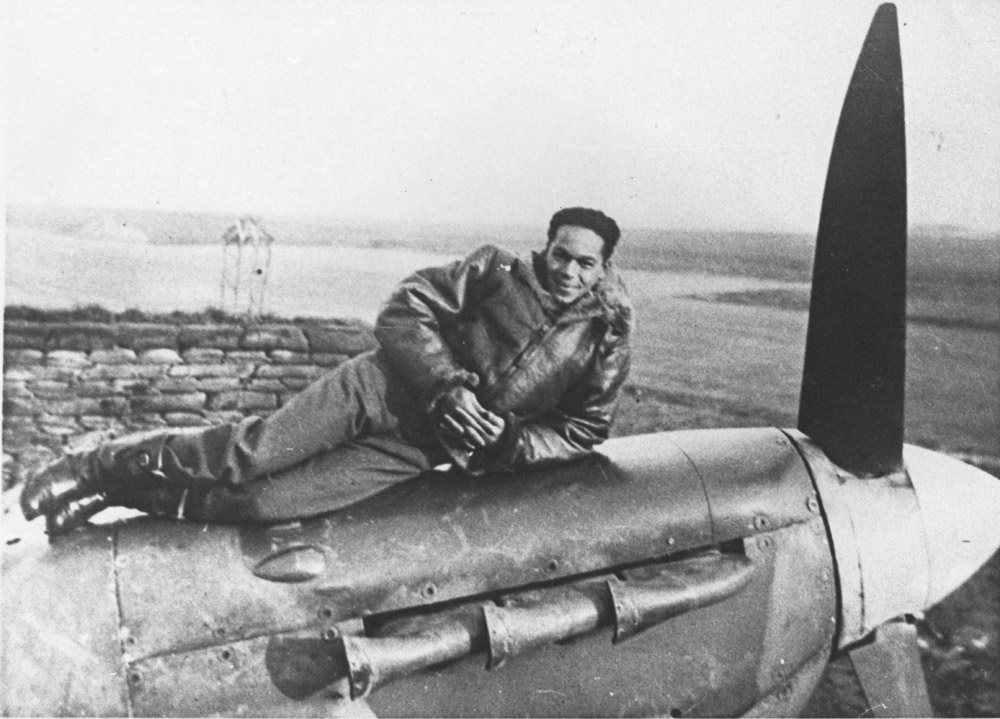
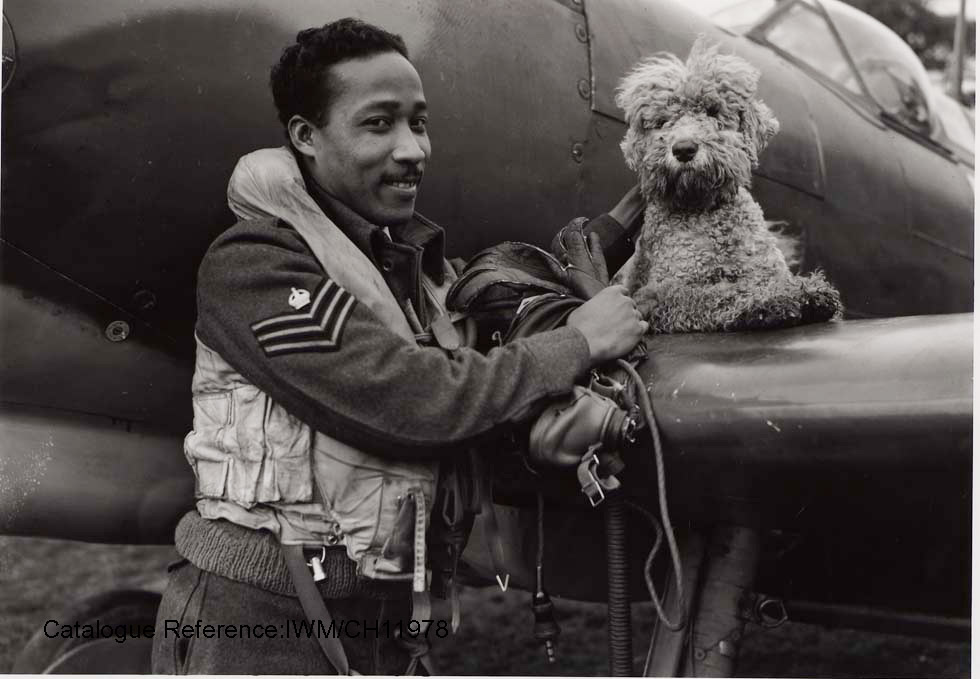
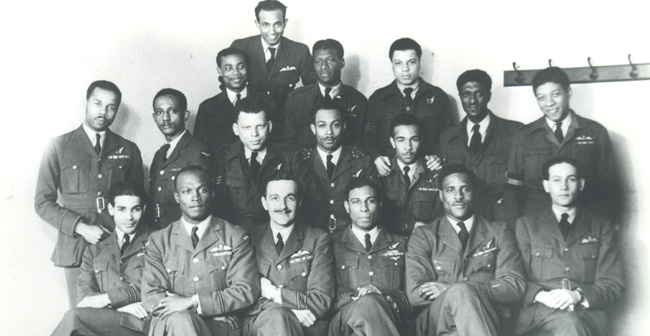
During World War 2, The Royal Airforce is widely credited with saving Britain from invasion by thwarting the Luftwaffe’s attempts to crush British spirit and achieve total air superiority. It is often mentioned that Polish and Canadians Served in the Air Force, but the Indians and West Indians hardly ever get a mention. In fact, In a glossy magazine that I picked up last month commemorating the Battle of Britain, not one Black or Asian Airman was featured or even mentioned. Perhaps the publishers didn’t know of their involvement? Perhaps the Publishers did, but chose to omit them, if so why? Surely, if Black and Asian shoppers felt more connected with the events of WW2 then they would spend their hard-earned cash, and learn in the process?
Until as recently as 1997 Caribbean Troops who served in both Wars weren’t even invited to the Cenotaph to commemorate the War Dead. All this amounts to a whitewashing of history, and one could be forgiven for thinking that black people, simply didn’t participate in either World War. Today there are so few old comrades left, that without a concerted effort to insert their efforts into the public consciousness, who would even know of their efforts?
Of course, there are countless examples of black Britons I could use to illustrate this point but the loss of Black history and contribution is lamentable indeed, not just for black people but for all Britons regardless of colour. British citizens must have a detailed historical record of our past. The Internet now provides new ways to locate and present that information, not just to each other but to the whole world.
Until the above examples and countless others find their way into the majority of history reports, the school curriculum and publications, then Black History Month will always be needed because without it we are simply not getting the full picture.
Related Links
